Closing between Christmas and New Year? Whether you can make staff use annual leave depends on the award or agreement that covers them. Here is what to check before the doors close.
Plenty of Victorian businesses close for a week or two over Christmas and New Year. The usual plan is simple: shut the doors and have everyone take annual leave. Whether you can actually require that depends less on the calendar than on what covers each employee: a modern award, an enterprise agreement, or neither.
Can you require staff to take annual leave during a shutdown?
Sometimes, but not automatically. The Fair Work Ombudsman’s position is that an employer can direct employees to take annual leave during a shutdown if their award or enterprise agreement allows it. If the award or agreement has no rule allowing the direction, you cannot direct the leave. You can still agree with employees that they will take annual leave, leave in advance or unpaid leave over the break.
For employees who are not covered by any award or agreement, section 94 of the Fair Work Act 2009 lets an employer require them to take paid annual leave, but only if the requirement is reasonable. The Act’s own note gives a shutdown between Christmas and New Year as an example of when it may be reasonable. Reasonableness still depends on the circumstances, and a last-minute direction is harder to defend.
Read the award or agreement first
Many modern awards have a shutdown clause, but they are not all the same. The Clerks Award is a common example. Under clause 32.5, an employer that intends to shut down all or part of its operation and wants affected employees to take paid annual leave must:
- give affected employees 28 days’ written notice, or a shorter period agreed between the employer and the majority of relevant employees
- give written notice to anyone hired after that notice, as soon as reasonably practicable
- make each direction in writing, and make it reasonable
- direct only leave the employee has already accrued
The Fair Work Ombudsman says that in most cases a shutdown direction must be reasonable, in writing and given within the required notice period. If an enterprise agreement applies, its terms govern, so check the agreement itself and not the award. Other awards may differ from the Clerks Award.
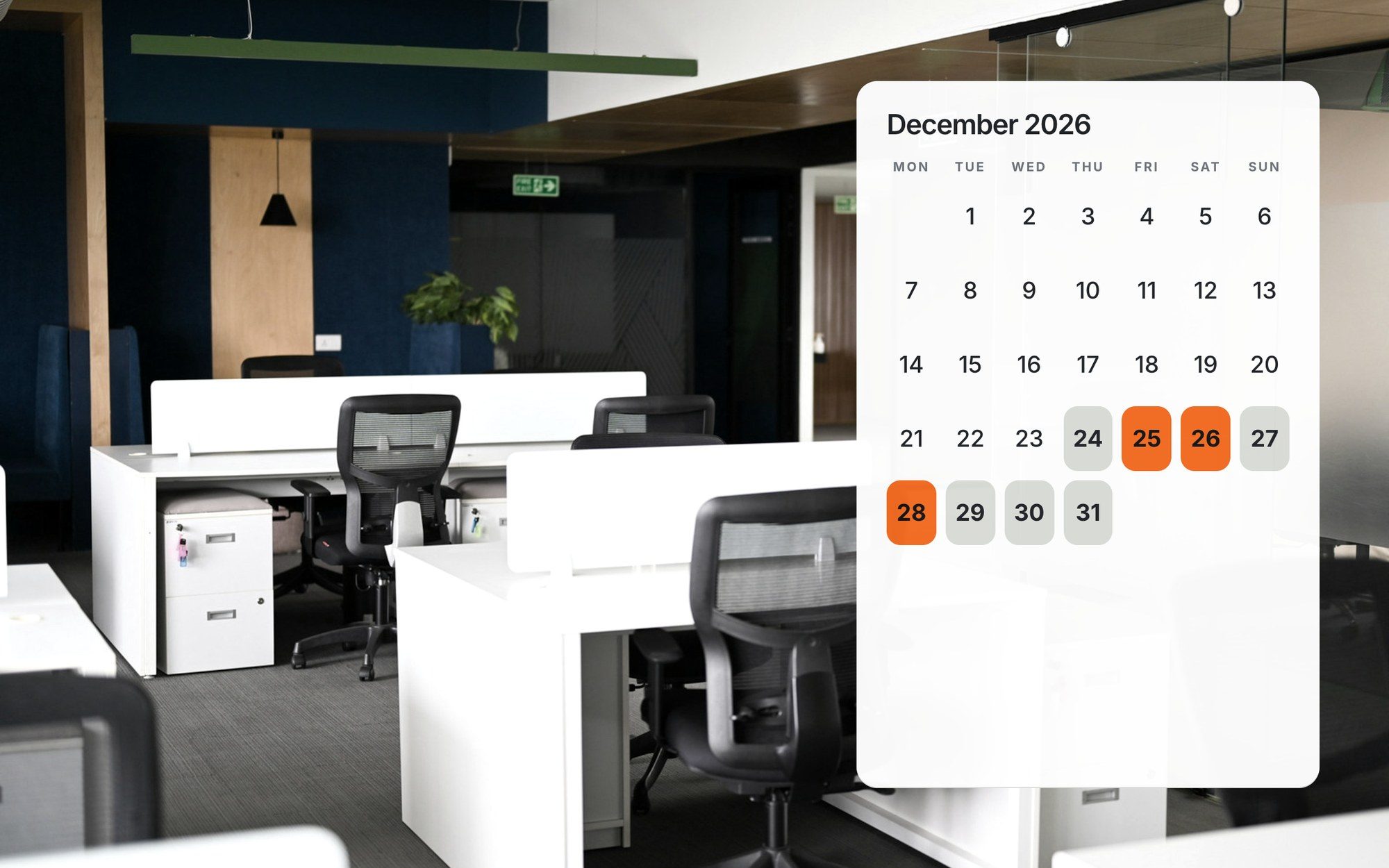
Timing matters. For a closure starting on Thursday 24 December, 28 days’ written notice meant notice in late November. If yours did not go out in time, check whether the award allows a shorter period by agreement with the majority of affected employees, and get that agreement in writing.
What if an employee does not have enough leave?
A newer employee may have only a few days accrued, and a direction under a clause like the Clerks Award covers accrued leave only. For the rest of the closure, the options depend on the award or agreement, and they generally rest on agreement, not direction:
- the employee may agree to take annual leave in advance
- the employee may agree in writing to take leave without pay for that part of the shutdown
Both should be recorded in writing before the shutdown starts. The Fair Work Ombudsman publishes a template agreement for taking annual leave in advance. Do not assume you can simply treat the shortfall as unpaid. If the employee does not agree, get advice before you close.
Public holidays during the shutdown
A public holiday that falls during annual leave is not counted as annual leave. Section 89 of the Act says an employee is taken not to be on paid annual leave on a public holiday. A full-time or part-time employee who would normally work that day is paid their base rate for their ordinary hours instead.
In Victoria this year, Christmas Day is Friday 25 December. Boxing Day falls on Saturday 26 December, with an additional public holiday on Monday 28 December. New Year’s Day is Friday 1 January 2027. Check your payroll system will not deduct annual leave for those days.
A shutdown is not a stand down
A stand down is a different thing. It applies when employees cannot be usefully employed for reasons outside the employer’s control, such as an equipment breakdown the employer is not responsible for. A planned Christmas closure is a decision the business makes, so the stand down rules are not a way around the shutdown rules.
What to document before you close
- the award or agreement that covers each employee, and its shutdown clause
- the shutdown dates and the date written notice was given
- any majority agreement to a shorter notice period
- each employee’s accrued leave at the start of the shutdown
- written agreements for leave in advance or unpaid leave
- who, if anyone, is working or on call, and how they will be paid
If staff will keep working through the break, the Fair Work Ombudsman suggests discussing in advance whether anyone needs to be contactable, given the right to disconnect.
How we can help
Crownmark Lawyers’ commercial and business team advises Victorian employers on employment and contractor arrangements, including award coverage, leave directions and the written notices that go with them. If a staff disagreement is already brewing, our article on facing a staff dispute may also help. To have your shutdown notice checked before it goes out, book a consultation or call 1800 884 751.
This article is general information about Australian employment law as it applies to Victorian employers and is current as at 6 November 2026. It is not legal advice and does not take account of your circumstances or the particular award or agreement that covers your employees. For advice on your situation, please contact us or another qualified practitioner.

Written by
Managing Partner · LL.B · BBus (Acc)(Fin Risk) · IPA · IFA · GDLP · LPMC